

Choosing the right cat carrier backpacks starts with measuring your cat.
Only with the correct measurements can you be sure the carrier fits — and that your cat can travel comfortably and safely to the vet or on holiday.
In addition to the right size and length, the weight capacity of the bag is also important. This must match your cat's body weight.
In this article you'll learn which three measurements you need, how to take them correctly, and which mistakes to avoid. That way you can always travel safely and stress-free with your pet.
Why are the correct measurements of a cat backpack important?
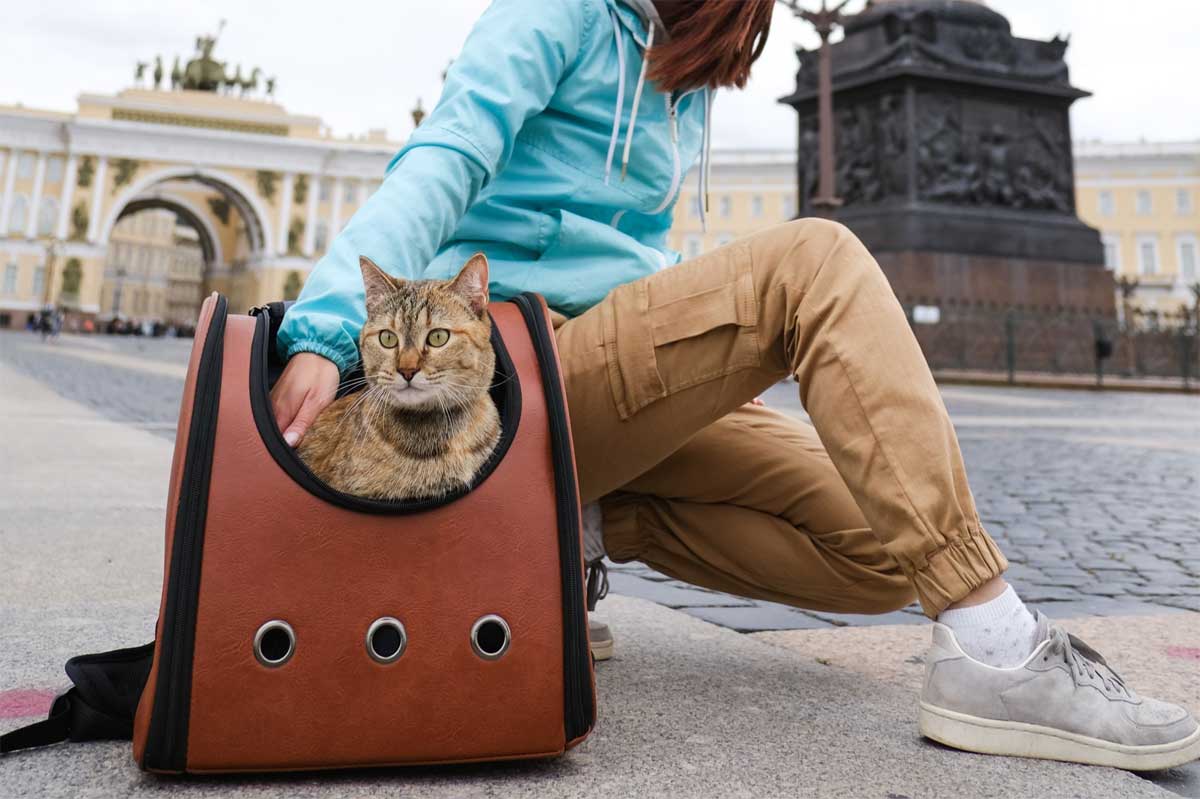
A cat carrier bag must have the right size for several reasons.
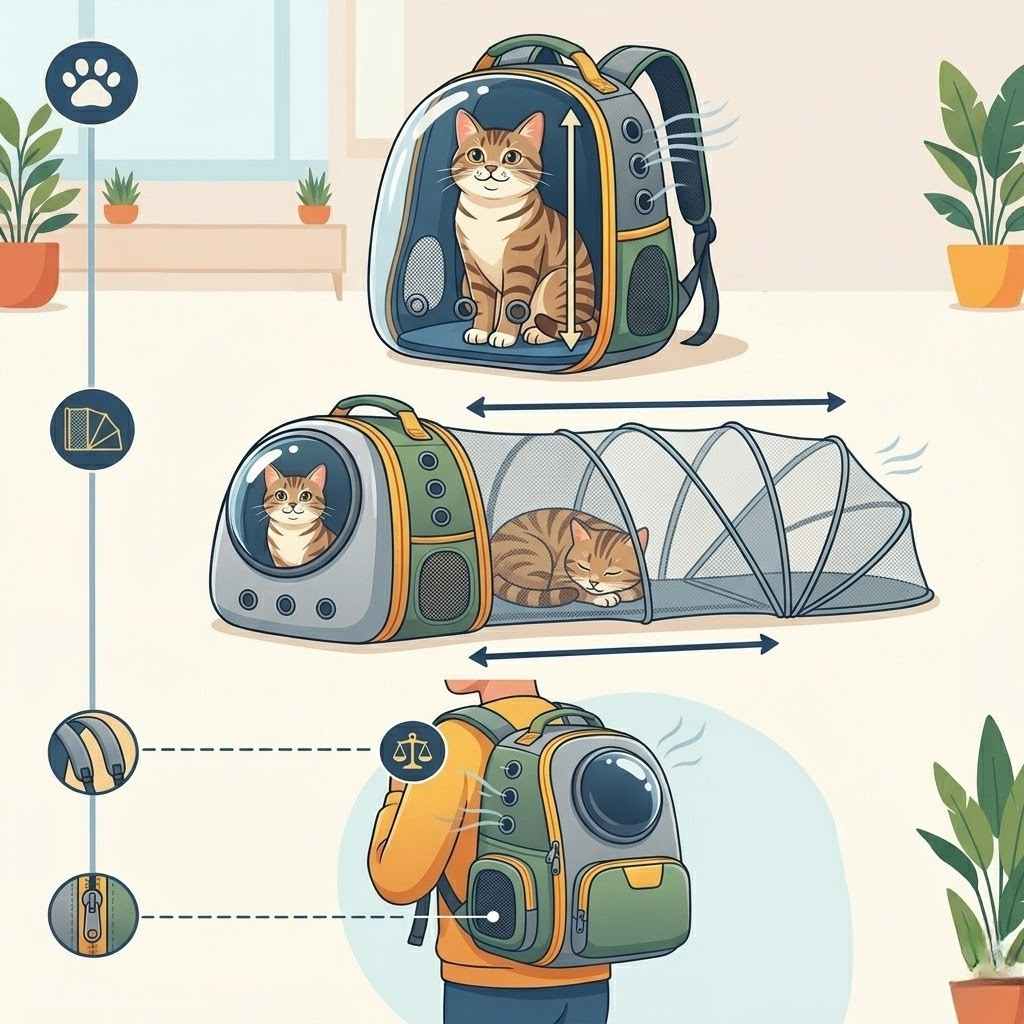
What do you need to measure your cat?
Measuring your cat to choose the right XXL cat backpack or smaller carrier can be done on your own.
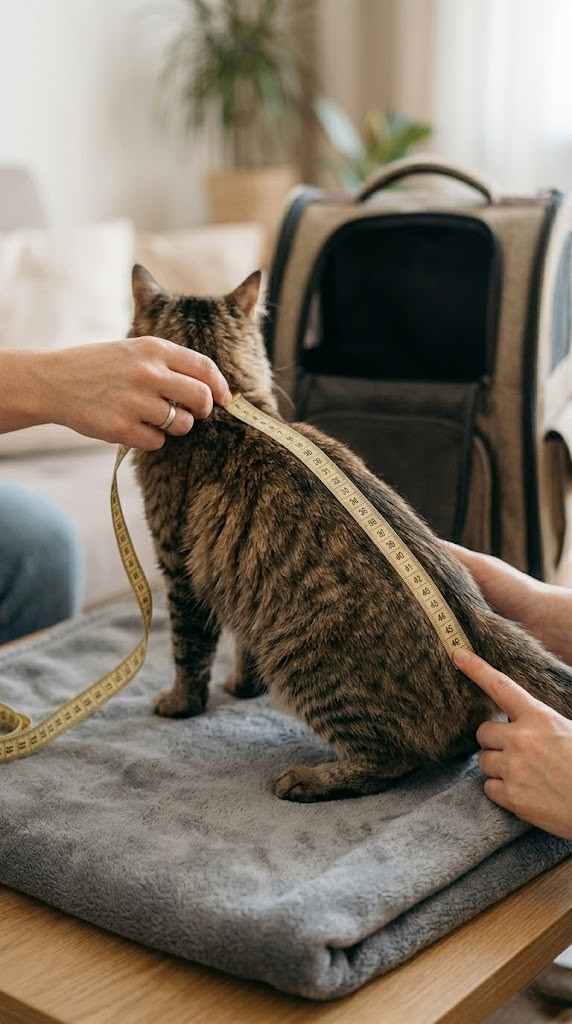
How to measure a cat for a cat backpack: step by step
There are three measurements you need. The overview table below shows how to take each measurement and what to do with the result.
| Measurement | Cat position | How to measure | Minimum backpack size |
|---|---|---|---|
| Body length | Standing or lying | Tip of nose → base of tail | Result + 10 cm |
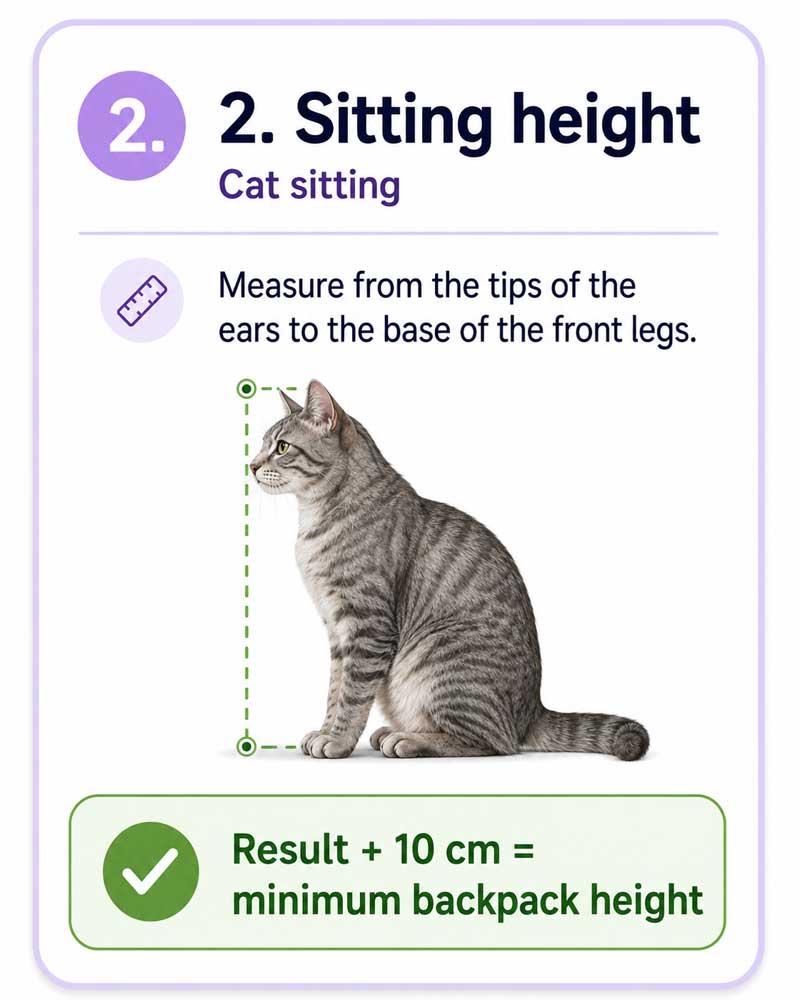
| Sitting height | Sitting | Tips of ears → base of front legs | Result + 10 cm |
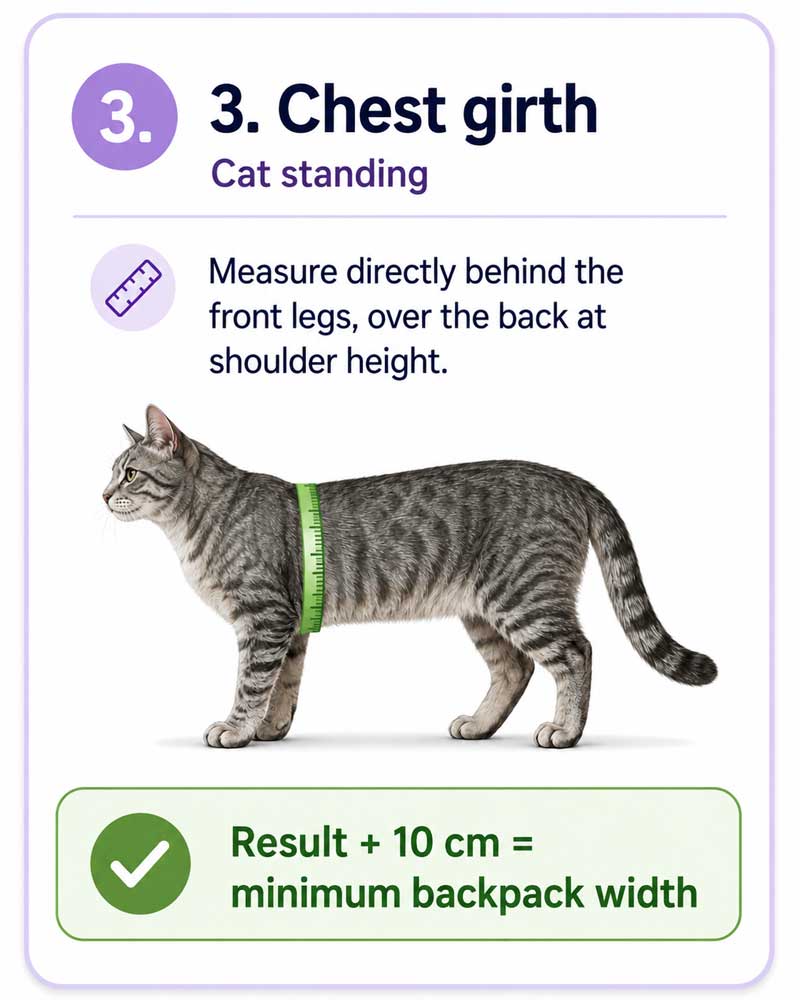
| Chest circumference | Standing | Directly behind the front legs, over the back at shoulder height | Result + 10 cm |
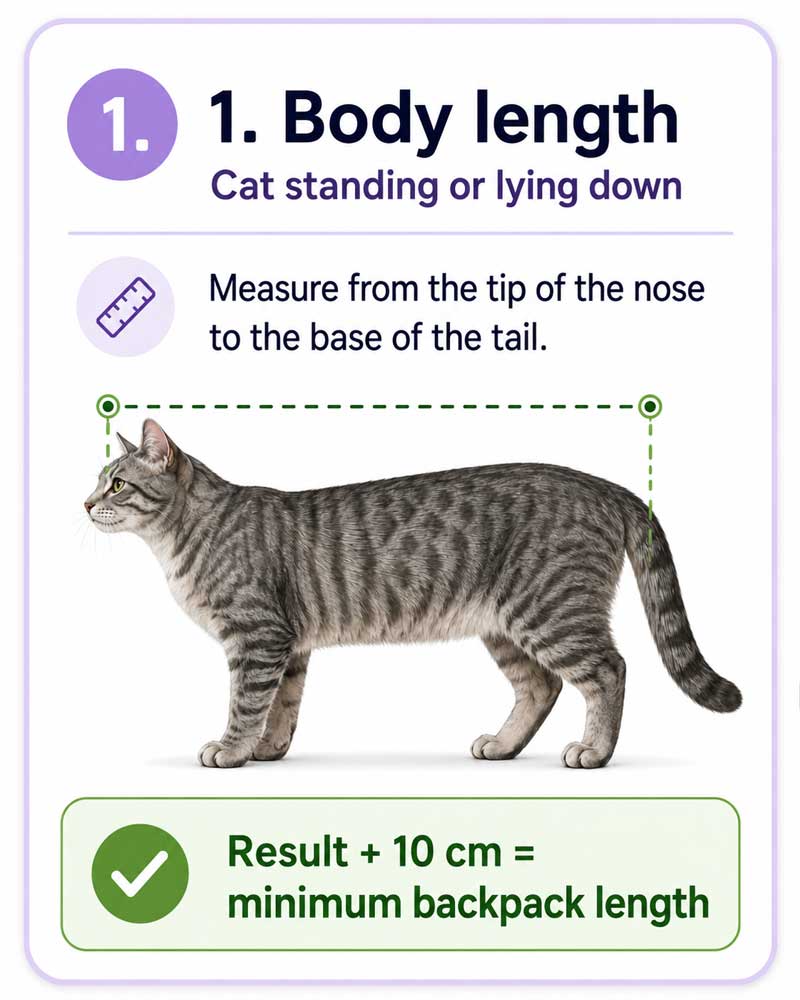
Measure from the tip of the nose to the base of the tail.
Measure from the tips of the ears to the base of the front legs.
Measure directly behind the front legs, over the back at shoulder height.
Measuring body length
Measure your cat's length from the tip of the nose to the base of the tail.
Add + 10 cm to this result. This tells you the minimum length the cat carrier must have.
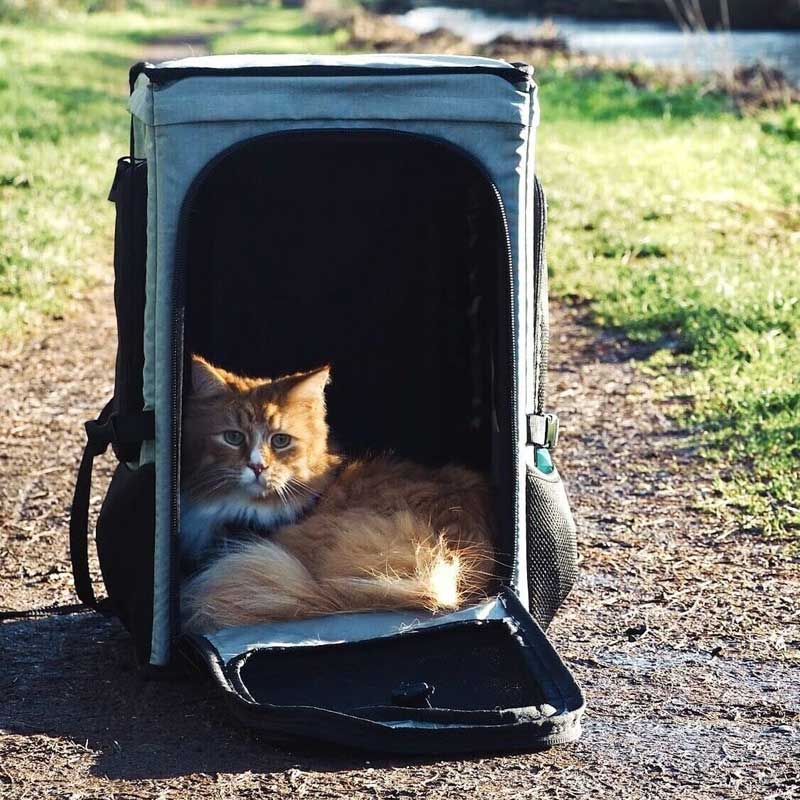
Do you often pause during a journey, or would you like to use the cat carrier bag as a sleeping spot too? Then opt for an expandable carrier.
The Catella Expandable Cat Carrier has a weight capacity of up to 8 kilograms. This makes it suitable for large cat breeds such as the Maine Coon or Norwegian Forest Cat.
Measuring sitting height
The best way to measure your cat's height is when the cat is sitting.
Measure from the tips of the ears to the base of the front legs. The result + + 10 cm is the minimum internal height the backpack must have.
Measuring chest circumference
Measure the chest circumference with the cat in a standing position.
Measure directly behind the front legs, over the back at shoulder height.
With the correct width you'll know how roomy the carrier bag needs to be to allow the animal to turn around easily. Add + 10 cm to the measured circumference here as well.
Cat backpack weight capacity: how much load capacity do you need?
In addition to the dimensions, also pay attention to the maximum weight capacity of the carrier.
The table below helps you quickly make the right choice based on your cat's weight.
| Cat weight | Category | Recommended capacity | Example breed |
|---|---|---|---|
| Up to 4 kg | Small / mediumSingapura, Devon Rex | Carrier up to 4 kg | Singapura, Devon Rex |
| 4 – 7 kg | AverageBritish Shorthair, Ragdoll | Carrier up to 7 kg | British Shorthair, Ragdoll |
| 7 kg and over | Large / heavyMaine Coon, Norwegian Forest Cat | Carrier up to 8+ kg | Maine Coon, Norwegian Forest Cat |
Will my cat fit inside? Here's how to measure up
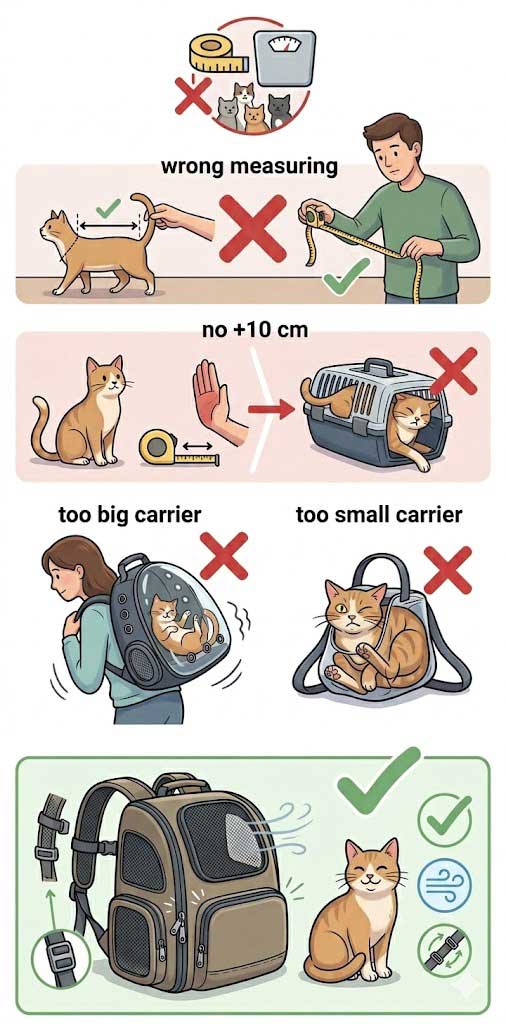
Add + 10 centimetres to each result. Your cat must be able to comfortably stand, turn around and lie down in the backpack.
Common mistakes when measuring a cat for a carrier bag
There are a number of common mistakes when measuring your cat that you'll want to avoid:
- Not measuring the cat in the correct way
- Not adding + 10 centimetres to the result
- Choosing a cat backpack that is too large and becomes unstable
- Buying a backpack that is too small and uncomfortable
Buy a cat backpack with porthole and multiple openings
Do you travel with your pet often — or are you planning to in the future?
Then a good cat backpack is important for your cat's comfort and safety.
At Zoospot you'll find various types of cat backpacks: with a porthole window, expandable carriers, or bags with a top and side opening.
Browse the collections below and order easily online:
Frequently asked questions about measuring a cat for a backpack
How do I measure my cat's body length? +
Measure the length from the tip of the nose to the base of the tail.
Add 10 centimetres to this result. The minimum internal length of the cat backpack must be at least equal to this number.
How do I measure my cat's height? +
Measure your cat in a sitting position, from the tips of the ears to the base of the front legs.
Add 10 centimetres to the result. This is the minimum internal height the backpack must have so your cat can sit upright comfortably.
Why always add 10 centimetres? +
Those extra 10 centimetres ensure your cat has enough room to move — to turn around and sit or lie comfortably.
At the same time, it prevents the carrier from becoming so roomy that it becomes unstable during transport.
How heavy can my cat be for a cat backpack? +
That depends on the carrier. Backpacks with a capacity up to 4 kg are suitable for small cat breeds.
For medium and large breeds, choose a carrier with a weight capacity of 7 kg or more. The Catella Expandable Cat Carrier, for example, has a weight capacity of up to 8 kilograms.
Can a cat backpack be too big? +
Yes. A backpack that is too large is unstable and can be unsafe during transport.
Your cat slides around and may fall over with sudden movements. Always choose a carrier that matches the specific measurements of your cat.
Which measurements are important when choosing? +
The three most important measurements are the body length, the sitting height, and the chest circumference of your cat.
In addition to these measurements, the maximum weight capacity of the carrier is also an important criterion, along with ventilation openings, sturdy zippers, and an adjustable shoulder strap.
Is an expandable backpack better for large breeds? +
Expandable cat backpacks offer extra space so your cat can lie down and relax comfortably even during a longer journey or rest stop.
They are particularly suitable for large breeds such as the Maine Coon or Norwegian Forest Cat, provided the weight capacity of the bag is sufficient.
Recent posts