Flying with your pet? Buckle up — it's a little more involved than tossing Fido in a bag and hoping for the best.
Honestly, the rules are a maze, but if you get the carrier right and prep your furry sidekick, things can actually go pretty smooth — cabin or cargo, doesn't matter.
Still, you gotta know what the airline wants, or you're in for a rough ride (and maybe a super sad goodbye at check-in if your pet gets rejected).
Let's get the basics out of the way
-
Only dogs and cats are welcome. Forget about sneaking your hamster, parrot, or emotional support iguana — ain't happening.
- And you can't just show up at the airport, pet in tow.
You've gotta book your animal's spot ahead of time because there's only so much room for four-legged travelers.
-
No spot? No flight. Doesn't matter if it's a teacup chihuahua or a Maine Coon the size of a raccoon.
Paperwork is King
- Pet passports, microchips, and up-to-date vaccinations. Miss one thing and your buddy's grounded.
- Some destinations don't allow pets at all depending on rules and aircraft type, so always double-check before planning that Parisian getaway with your cat.
Cabin Travel Requirements
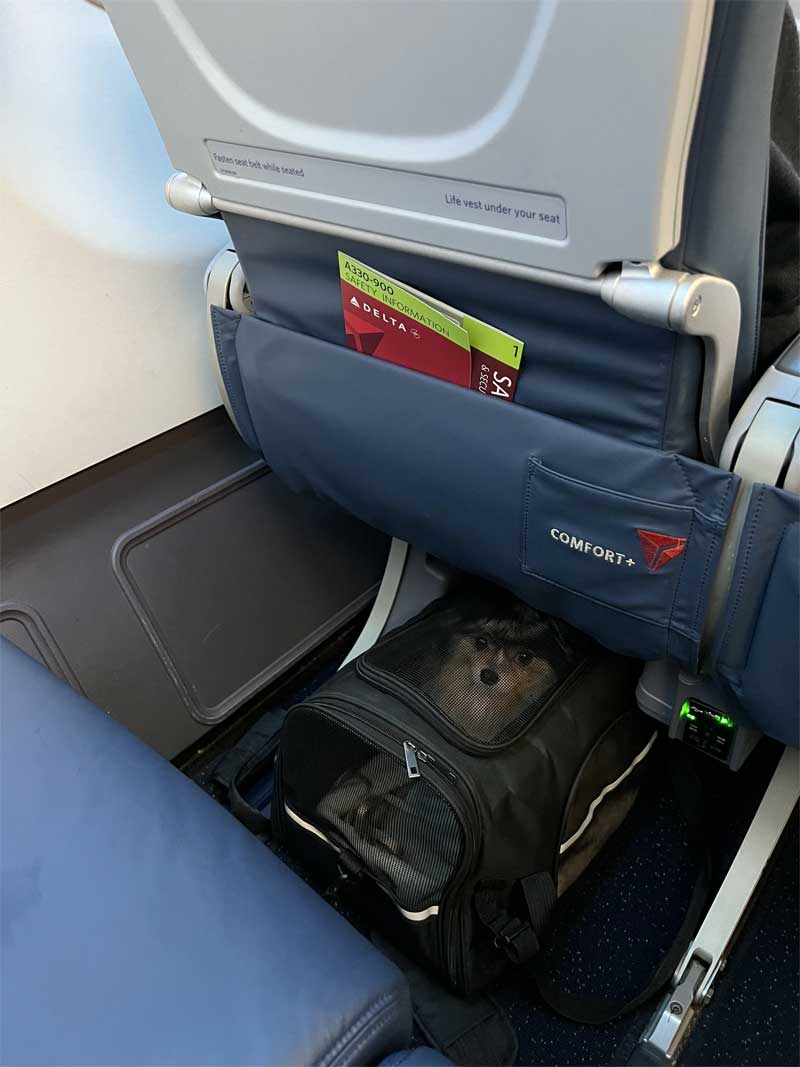
Whether your pet gets to ride up front depends on size, age, and carrier type.
Cabin rules:
- Only soft-sided carriers are allowed.
- Must fit under the seat: 40 × 30 × 24 cm.
- Pet + carrier must not exceed 8 kg.
- Your pet must be at least 15 weeks old.
- If two people bring pets, they can't sit in the same row.
- No emotional support animals.
- Cost: usually €50–€180 one way.
Why these rules?
The cabin is tight. No one wants a loose cat sprinting down the aisle or a carrier that doesn't fit.
Soft bags are flexible and escape-proof, and the weight limit prevents overheating or squishing under the seat.
Pets in the Hold
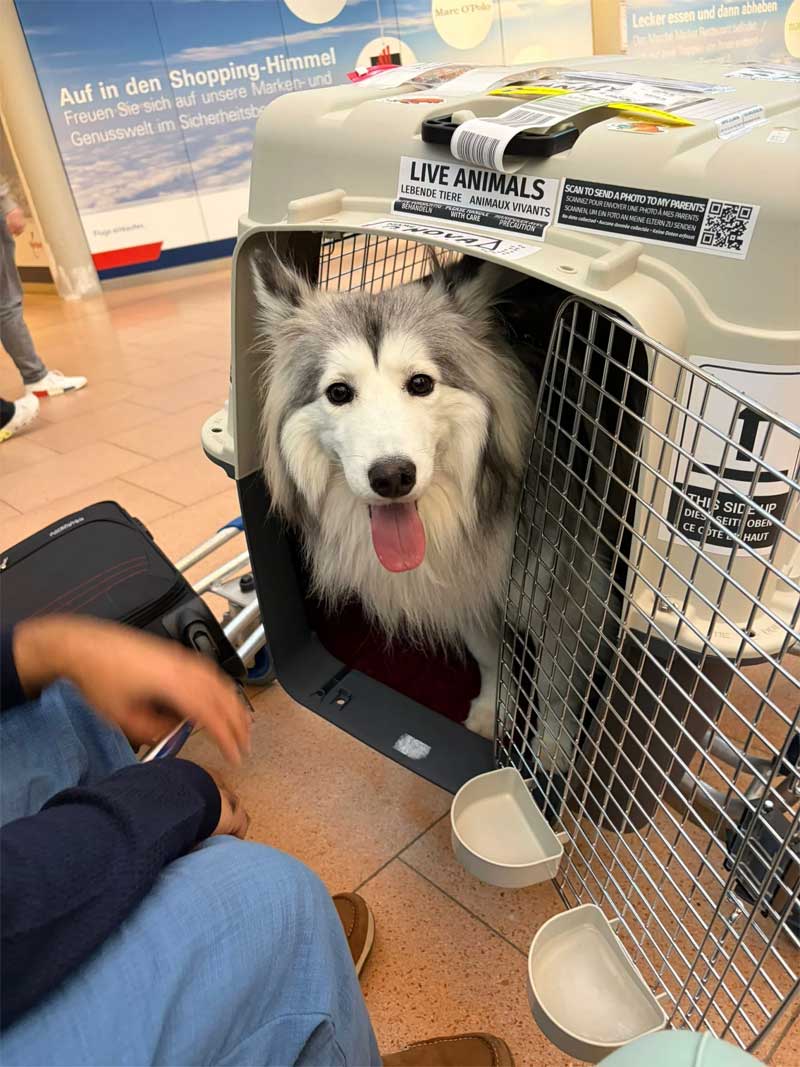
If your pet is too big for the cabin or the cabin quota is full, they go into the heated, pressurized hold.
Hold rules:
- Maximum of two pets per flight.
- Crate must be hard-sided with a solid latch and ventilation.
- Floor must be leak-proof.
- Puppies/kittens must be at least 3 months + 21 days.
- If two young animals share a crate, they must be siblings under six months.
- Price usually €77–€100+.
Don't get clever: rodents, reptiles, birds, fish — none are allowed.
Certain snub-nosed breeds (bulldogs, Persians, etc.) may have restrictions due to breathing issues.
What a Good Carrier Looks Like
For cabin travel:
- Soft-sided and closable
- Mesh ventilation
- Fits under the seat but still comfy for the pet
For hold travel:
- Hard plastic or similar sturdy material
- Strong, secure lock
- Plenty of air holes
- Large enough for the pet to stand, turn, and lie comfortably
- Absorbent lining inside
Pro tip: Let your pet get used to the carrier days before the flight so they don't panic at the airport.
Add a blanket, keep water available until check-in, and hope for smooth skies.
Why does this really matter?
Because flying with animals is serious business.
One bad carrier or one escaped pet and the whole cabin turns into chaos.
Stick to the rules and both you and your four-legged co-pilot will arrive with your sanity (mostly) intact.