

0 Comments
6 effective Tips from a Pet Expert: How to Choose a Backpack for Traveling with a Cat
Artem VinnikovTraveling with your cat can be a genuinely good experience when the gear is right. Most of it comes down to one decision: which cat backpack you carry them in.
A quick trip to the vet, a hike in the hills, an afternoon in town — each asks something slightly different from a cat carrier backpack. Here are six things worth checking before you buy.
Contents
- Why choose a cat backpack?
- 6 tips for choosing the right cat backpack
- Common mistakes to avoid
- Conclusion: find the right backpack for your cat
Why choose a cat backpack?
A backpack keeps your hands free, which changes how a trip feels — you can hold a railing, open a door, or use walking poles without putting your cat down. Compared with a shoulder bag, the weight also sits closer to your back, so longer walks are easier on you.
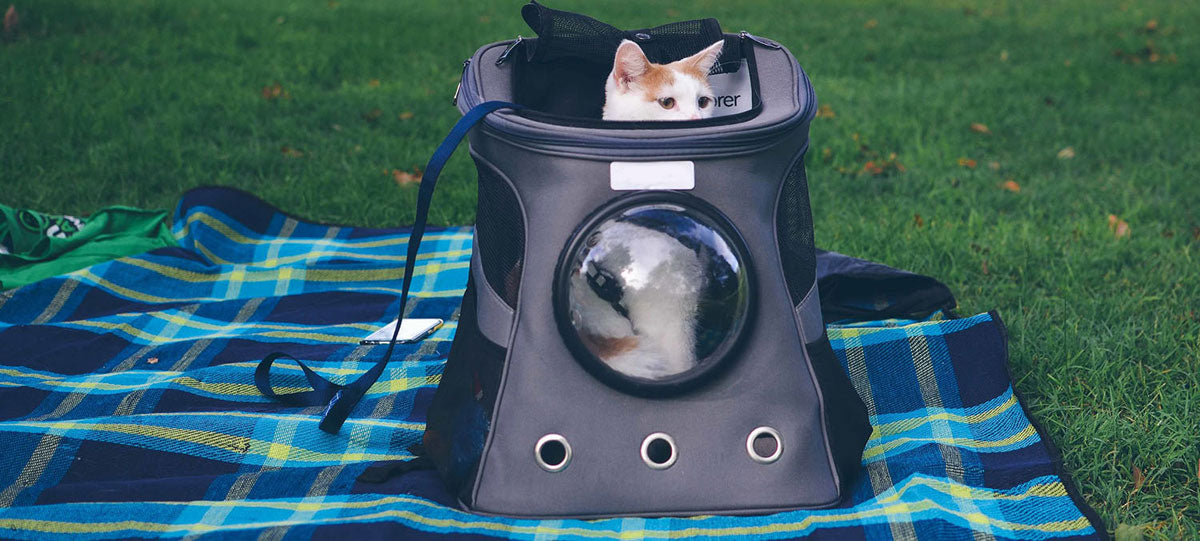
Hands free, cat secure — the main reason owners switch to a backpack
What most owners notice:
- A calmer cat: an enclosed, softly lined space gives them somewhere to settle instead of somewhere to escape from.
- Easier transport: crowded stations, stairs and uneven trails are all simpler with both hands available.
- Everyday usability: the same bag works for the vet, the train and the weekend.
You can see the full range in our cat backpacks collection.
6 tips for choosing the right cat backpack
1. Size and comfort
Size is where most purchases go wrong. Your cat should be able to stand, turn around and lie down without pressing against the sides.
- Measure first: length from chest to base of the tail, height at the shoulder, and current weight.
- Check the stated weight limit rather than guessing from the photos. A cat of 5–7 kg fits something like the 33 × 28 × 42 cm backpack, while a Maine Coon needs the Maine Coon backpack 40 × 31 × 54 cm, built for cats up to 12 kg.
- Borderline sizes are the case for an expandable model, such as the Catella expandable backpack — normal on the move, roomier once you stop.
- Travelling with two? A backpack for two cats beats two separate bags on one pair of shoulders.

Large breeds need height as well as floor space — this model is 54 cm tall
2. Ventilation and visibility
Airflow matters more than any other comfort feature, especially in summer or on public transport.
- Look for mesh on at least two sides, not just the door panel.
- Some cats relax when they can see out; others do better with less to look at. A bubble-window backpack or the capsule backpack with porthole suits the curious type; a mesh-only bag suits the nervous one.
- If the window is plastic, check that there are vents around it — a sealed dome heats up fast in the sun.

A window works for curious cats; mesh panels around it keep the air moving
3. Durability and safety
A frightened cat pushes surprisingly hard against a zip.
- Reinforced nylon or polyester with a rigid frame keeps its shape instead of collapsing onto your cat.
- Lockable or double-pull zips are worth looking for; an ordinary slider can be nosed open.
- An internal safety leash clip stops a bolt for the door when you open the bag at the vet.
4. Portability and features
On a long walk, the difference between a decent and a bad cat hiking backpack is felt in the shoulders after the first hour.
- Padded straps and a chest strap: they move the load off your shoulders. The Orbit Hopper is a good example for cats up to 10 kg.
- Storage: side pockets for water, treats and a folding bowl save carrying a second bag.
- Foldable design: models like the classic expandable backpack pack flat between trips.
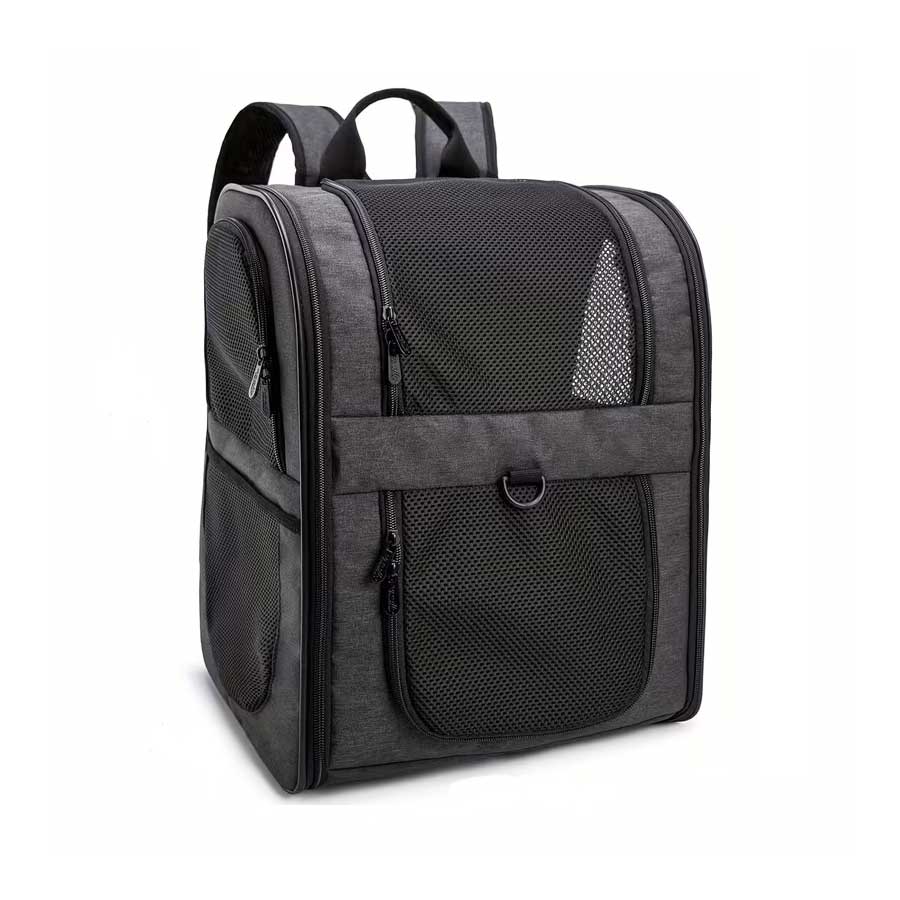
Padded straps and a chest strap are what you feel after the first hour
5. Airline compatibility
Flying is the one case where your cat's comfort isn't the only limit — the airline's rules decide what gets through the gate.
- Most European carriers cap the cabin at 8 kg for cat and bag together, with maximum dimensions somewhere between 40 × 30 × 24 cm and 55 × 40 × 23 cm.
- "Airline-approved" is not a certificate anyone issues. It means the bag falls within the published size and weight limits of a given airline, so check those limits on your carrier's own website before you book.
- A soft, compressible bag is safer at the gate than a rigid one: a couple of centimetres can usually be pushed down under the seat. For a 2-in-1 that works as bag and backpack, see the Nyx 2-in-1 backpack bag 50 × 35 × 30 cm.
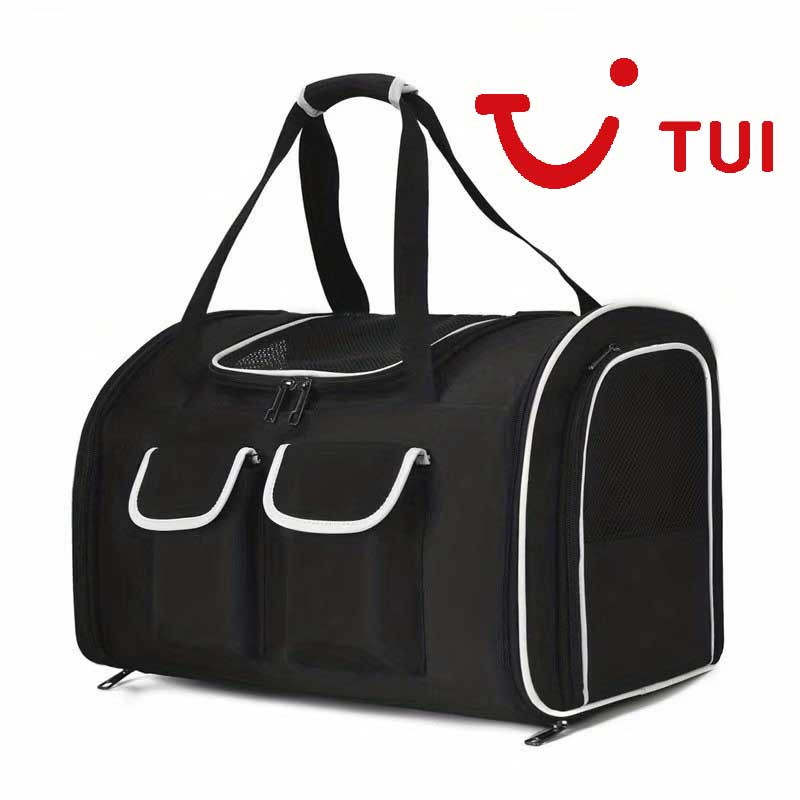
A 2-in-1 carries as a backpack and compresses under the seat as a bag
6. Style and design
You'll be wearing this thing, so it may as well look like something you'd carry anyway.
- Neutral greys and blacks read as an ordinary rucksack in the office or on the train.
- Capsule and bubble shapes get more attention — fun on a walk, less so in a waiting room.
- Check the base and the padding: a flat, firm floor is more comfortable for your cat than a rounded one, whatever the outside looks like.

Capsule shapes draw attention; neutral colours keep it office-friendly
Common mistakes to avoid
Even a well-made pet backpack disappoints if you get these wrong:
- Buying by breed name instead of by measurements and weight.
- Going oversized "to be generous" — a cat slides around in too much space and feels less secure, not more.
- Picking a design first and checking the ventilation second.
- Using it for the first time on the day of the trip. Leave it open at home for a week, feed a few treats inside, and let your cat decide it's furniture before it becomes transport.
Conclusion: find the right backpack for your cat
Measure your cat, pick the size band that fits with room to spare, then choose between mesh and window versions based on how your cat handles new places. Everything else — colour, pockets, capsule shape — is preference.

Still comparing? Start from your cat's weight and work back to the model
Ready to compare? Browse the cat backpacks at Zoospot and pick the one that matches your cat's size and your kind of trips.
Recent posts