

Buying a dog backpack to experience the best adventures together? Then it's important to measure your dog correctly. Dog backpacks are available in various sizes.
A well-fitting backpack offers your dog plenty of room to move and comfort, while keeping your hands free.
This way, you can safely take your dog with you on a walk or trip. How should you measure your dog before buying a dog backpack?
How to measure a dog for the K9 backpack
Why is it important to measure your dog for a dog backpack?
Measuring your dog correctly is important when buying a dog backpack. This way, you can be sure that the backpack is spacious enough, comfortable, and safe.Correctly measuring your dog also ensures you choose a dog backpack that can carry your dog's weight. This makes traveling with your four-legged friend comfortable for both you and your dog.
A backpack that's too small can cause injuries and wounds, as well as breathing problems. Bags that are too large and give the dog too much space create instability.
Measuring your dog is also important for choosing a bag with the correct weight capacity.
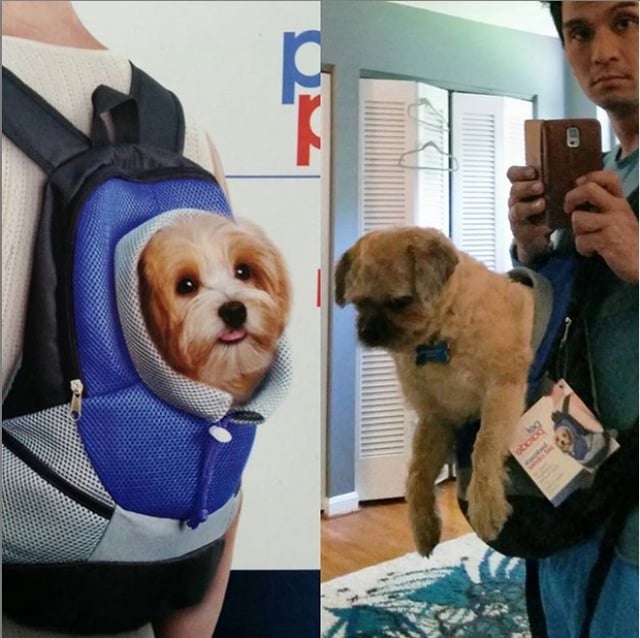
A situation where a dog's backpack was chosen incorrectly: 1st photo - the backpack is too big, 2nd photo - too small.
What do you need to measure your dog?
It's important to have the right supplies to take a correct measurement. Make sure you have these items on hand before you measure your dog.☝️You'll need a measuring tape to determine your dog's length and height, as well as a digital scale to weigh your dog's weight. Is your dog not used to being measured? Then some extra help is needed.
- Tape measure
- Digital scale
- Extra help for holding the dog
Measuring your dog for a dog backpack in 3 easy steps
Measuring your dog to buy the right size dog backpack is done in 3 easy steps. After measuring the length, also measure your dog's height, shoulder width, and chest circumference. Finally, it's also important to determine your dog's weight.
Step 1. Measure your dog's length
Start by measuring your dog's length. Use the measuring tape and measure the distance from the neck to the base of the tail. Keep the measuring tape taut, but not too tight. Measuring the length is important for the space available to sit and turn in the backpack.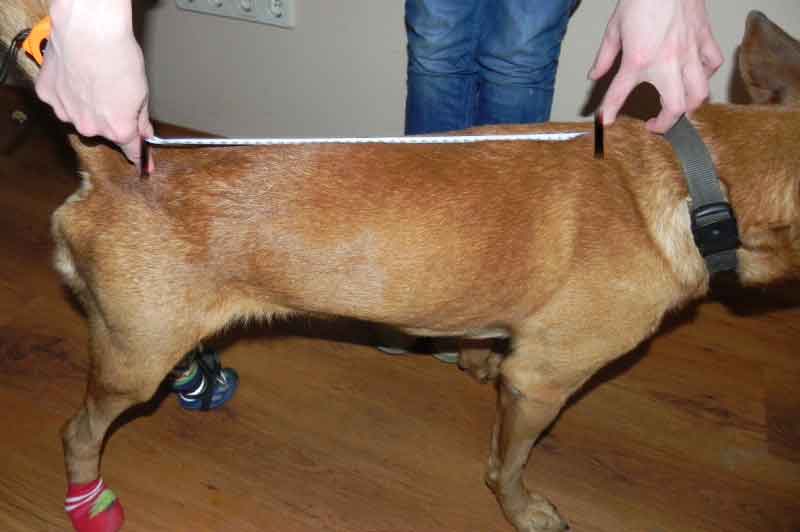
Step 2. Measure your dog's height and weight
Measure your dog's height by placing the measuring tape on the vertebrae at shoulder height. Now measure the distance to the ground via the front leg. To choose a backpack with the correct carrying capacity, it is also important to determine your dog's weight.The best way to do this is to place your dog on a digital scale.
Do you have a small dog? Then you can also hold the dog and weigh yourself. Then weigh yourself and calculate the following: body weight with dog - body weight without dog.
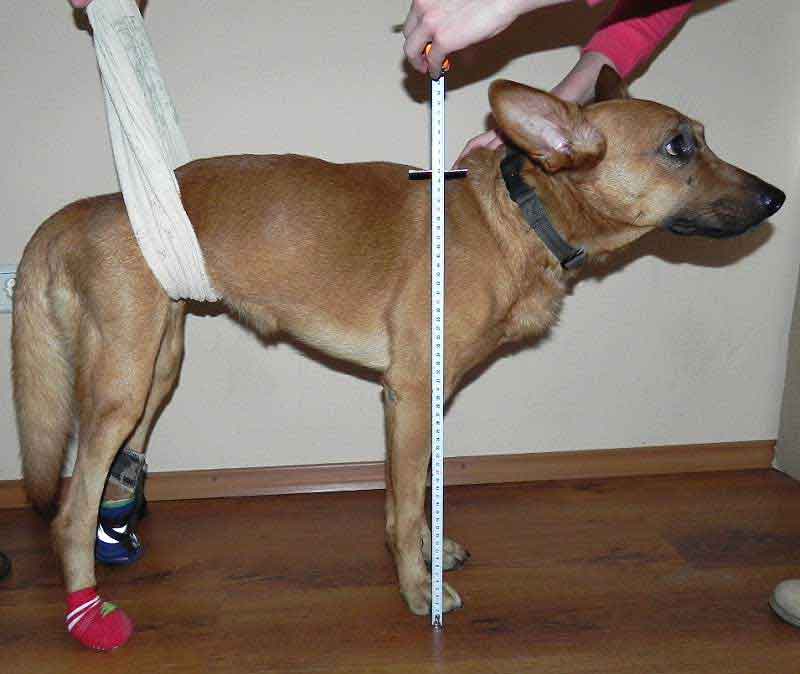
Step 3. Check your dog's shoulder width and chest girth
Measure your dog's shoulder width by running the measuring tape across the width of its back at shoulder height. You can measure its chest girth by placing the measuring tape behind its shoulders on its back.Now, run the measuring tape along the widest part of its chest behind its front legs, towards its shoulders. This is the correct chest girth.
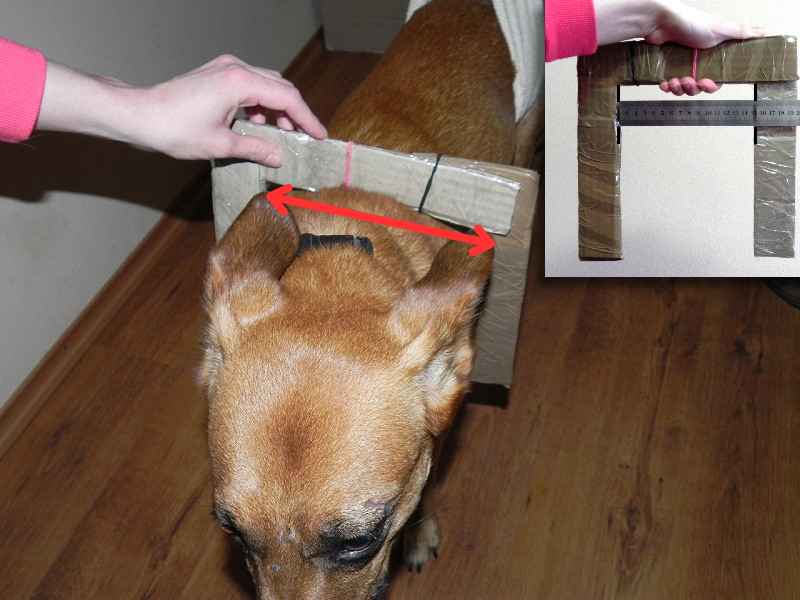
Measure your dog's shoulder width
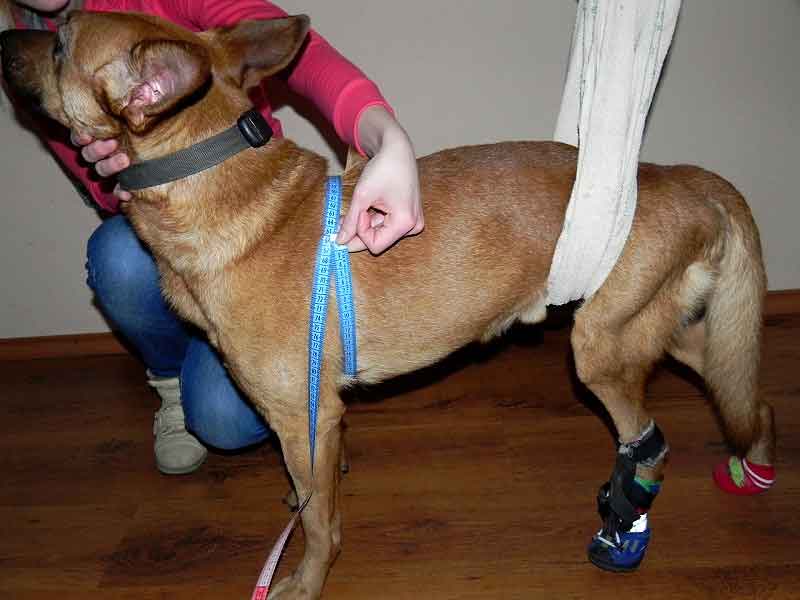
Your dog's chest circumference
How do you compare your dog's measurements to those of yours? Dog backpacks?
Choosing the right size dog backpack is important. The bag shouldn't be too large, but certainly not too small either. To choose a well-fitting backpack, compare your dog's dimensions with the carrier sizes.Choose a backpack that most closely matches your dog's body size, always choosing the largest size.
While too large isn't desirable, a dog backpack is better off being a little too large than too small. If a large bag comes close to your dog's dimensions but still proves to be a little too large, you can also use a dog backpack filler pad. When comparing sizes, also consider your dog's weight.
A bag with the correct carrying capacity contributes to the safety and comfort of both you and your dog.
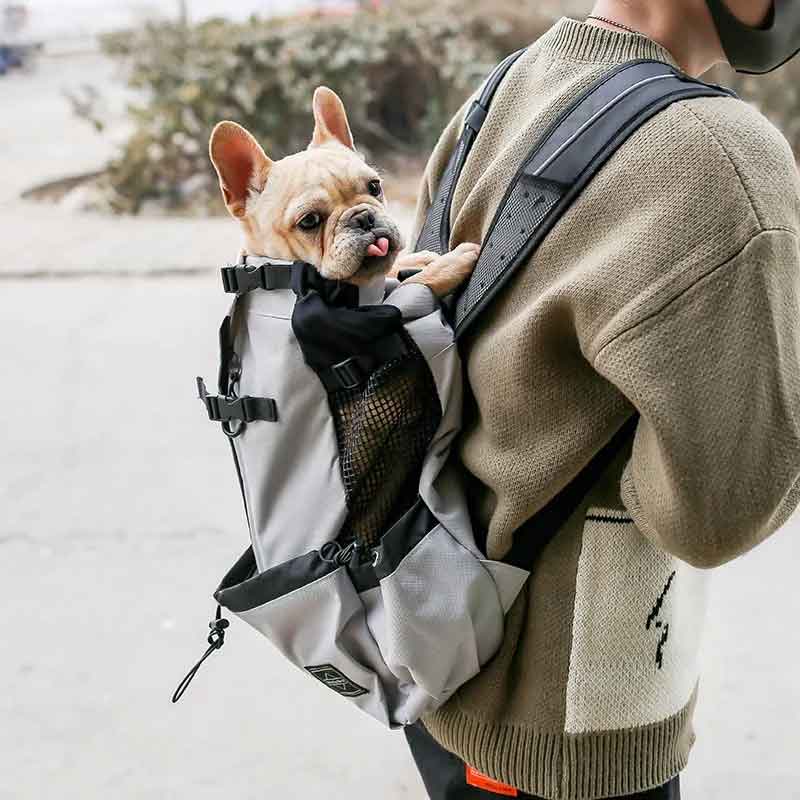
It's always better to choose a backpack that's a bit bigger than a bit smaller.
Common mistakes when measuring dogs for backpacks
Measuring your dog for a suitable dog backpack must be done accurately and correctly. Common mistakes when measuring include holding the measuring tape too tight. This increases the risk of choosing a dog backpack that's too small.Many mistakes are also made when measuring height, for example, by measuring the distance from the head to the ground.
You're likely to choose a backpack that's too big for your dog. Furthermore, many people underestimate a dog's weight. Determining the dog's weight is crucial for selecting a dog backpack with sufficient carrying capacity.
| How it shouldn't be | How it should be |
|---|---|
|
|
Choosing the right dog backpack based on size and Breed
Does your dog have difficulty walking long distances, has your dog had surgery or an injury, or do you want to take your four-legged friend safely on a trip? Then a dog backpack is the perfect solution.Choosing the right backpack depends on your dog's body size and breed. There are comfortable and safe dog backpacks for small breeds like Chihuahuas, but also for medium and large dogs like German Shepherds or Labradors.
The best dog backpacks are strong, comfortable, and safe. In addition, they often feature soft and adjustable shoulder straps, ample ventilation, and an internal leash for extra safety for your dog.
By correctly measuring your dog for a dog backpack using the steps above, you'll turn every trip into an adventure.
By correctly measuring your dog for a dog backpack using the steps above, you'll turn every trip into an adventure.
Recent posts