

Bringing your dog or cat on board? This guide sets out what Transavia asks of you: which carrier is allowed, what can travel in the cabin, what goes in the hold and which documents you need.
This is an informational overview based on the conditions Transavia publishes itself. Zoospot is not affiliated with Transavia and does not speak on the airline's behalf. Rules and fares change regularly, so always check the official Transavia page before you book.
Flying with a pet: where do you start?
Taking a dog or cat on holiday is perfectly possible, but it takes preparation. With Transavia you reserve your pet's spot separately, either together with your ticket or later in your booking. The number of animals per flight is limited, so leaving it until the last moment is rarely a good idea.
You can add a pet up to two hours before departure, as long as there is still space. Below you'll find what needs arranging for each part of the trip: the carrier, the documents and the booking itself.
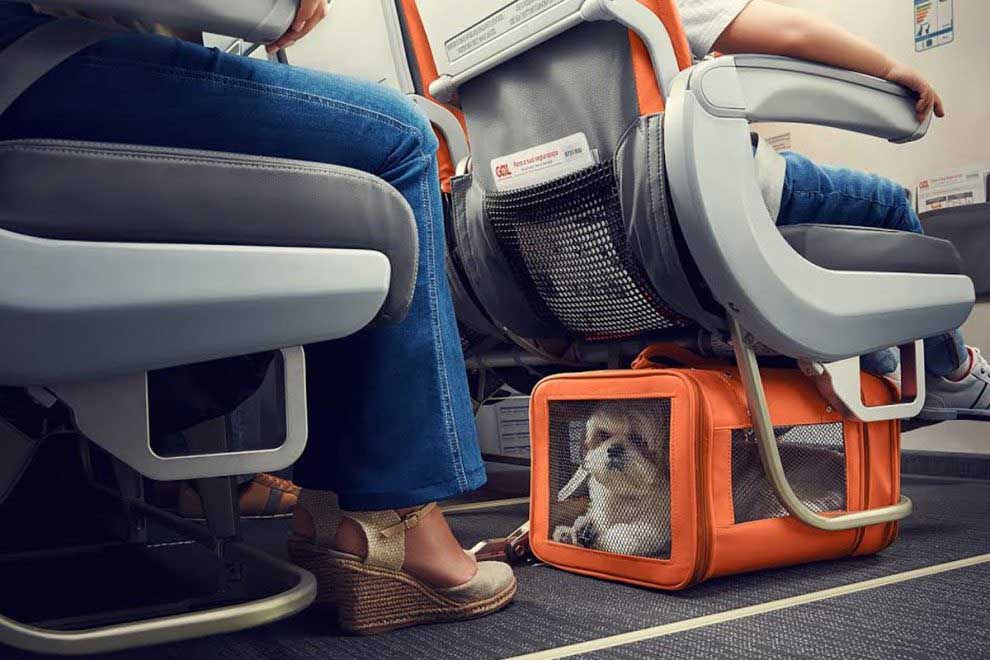
Dog in the airplane cabin
Two things are best arranged first, because they take the most time: a carrier or kennel in the right size and the pet passport from your vet.
Once that's ready, only the travel day itself is left. Count on being at the airport at least two hours before departure when travelling with a pet: check-in takes longer than without one.
Have a good trip!
Can I bring a pet into the Netherlands from abroad?
You can, but importing animals is strictly regulated. The reason behind it is protecting both people and animals from diseases such as rabies.
If your pet comes from outside the EU, the requirements are different and heavier than for travel within the EU. You can find which rules apply to your situation at the NVWA.
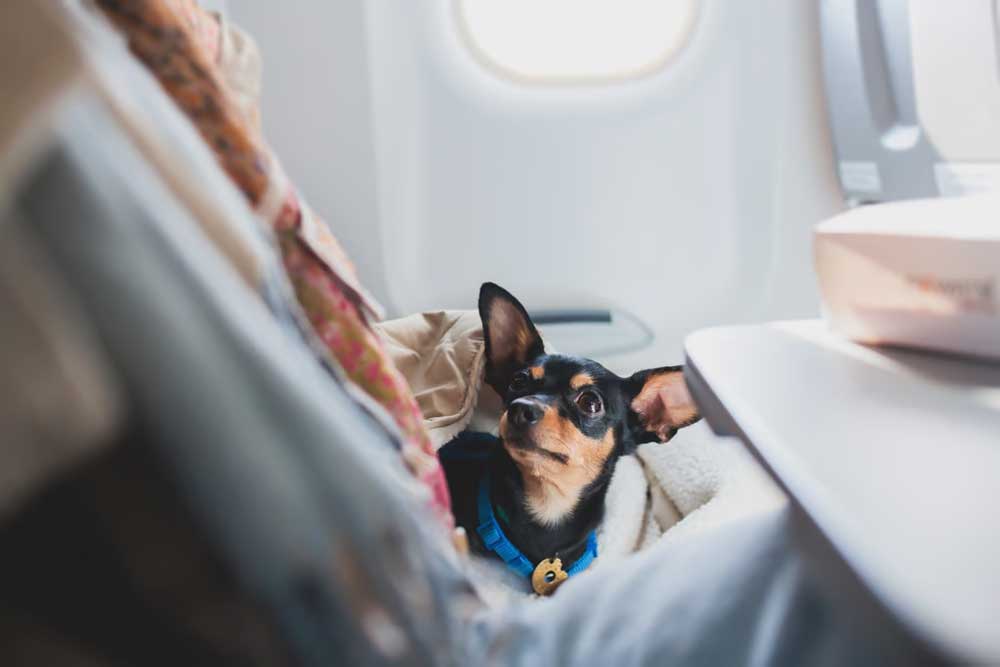
Dog travelling in the airplane cabin
Which dog breeds are refused?
Dogs classified as fighting or attack dogs are not carried by Transavia — neither in the cabin nor in the hold.
This isn't limited to pedigree breeds: dogs that closely resemble them are covered too.
- American Staffordshire Terriers (pit bulls) and similar dogs, such as Staffordshire Bull Terriers and (mini) Bull Terriers;
- Mastiffs and similar dogs;
- Tosas and similar dogs;
- Rottweilers and similar dogs.
What about snub-nosed breeds?
Pugs, boxers, bulldogs, Pekingese and Persian cats have shorter airways. Heat and stress during a flight make breathing harder for these animals than for other breeds.
For that reason, snub-nosed animals only travel in the cabin with Transavia, not in the hold. The combined weight of pet and carrier stays under 8 kg.
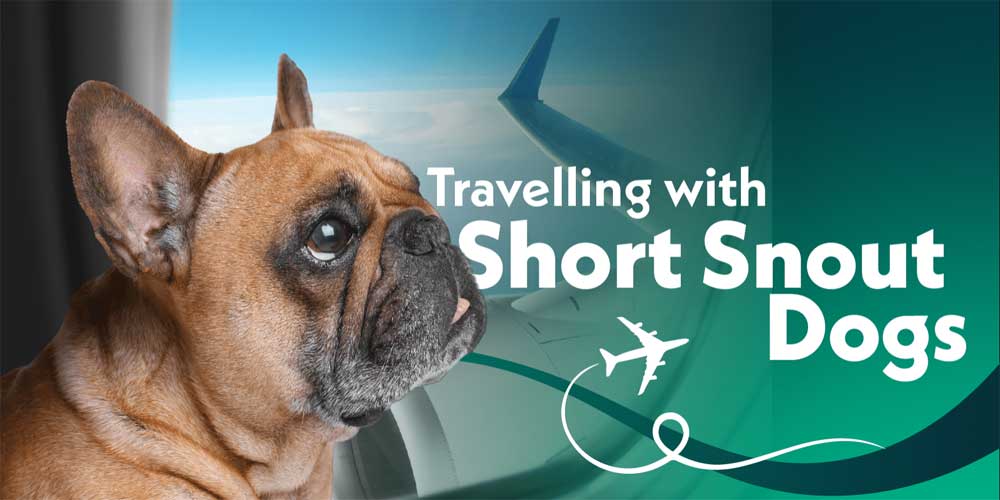
Travelling with a snub-nosed pet
Travelling in the hold: how does it work?
If your dog is too big for the cabin, it travels in a kennel in the baggage hold. That part of the aircraft is heated and has climate and pressure control.
A maximum of 2 kennels travel per flight, so booking early matters even more here than for cabin travel.
Travelling with a puppy or kitten? Young animals may share a kennel — with their mother, or with one family-related puppy or kitten.
These age limits apply:
- Together with the mother: the young animal is at least 3 months and 21 days and no more than 6 months old.
- Together with another young animal from the same family: both are at least 3 months and 21 days and no more than 6 months old. One kennel then holds two puppies or kittens.
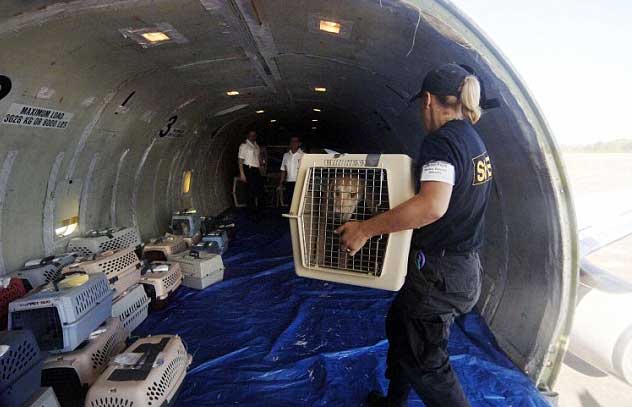
Transporting pets in the baggage hold
What does the hold cost?
If your flight number starts with HV, you pay € 77 per kennel per one-way trip.
If it starts with TO, the fare starts at € 100 per kennel per one-way trip. What you pay exactly depends on the destination and on how many spots are still available.
Please note: a kennel for the hold has to meet strict requirements, and you prepare it for travel yourself. The current requirements are listed on the Transavia website.
Which destinations can't my pet travel to?
A number of destinations are off the list. That isn't down to the legislation of the country itself, but to the rules of the airports involved.
Transavia does not carry pets to or from the United Kingdom, Iceland, Scotland, the United Arab Emirates and Chambéry.
Departing from Turkey? Read the import conditions for animals from that country in advance.
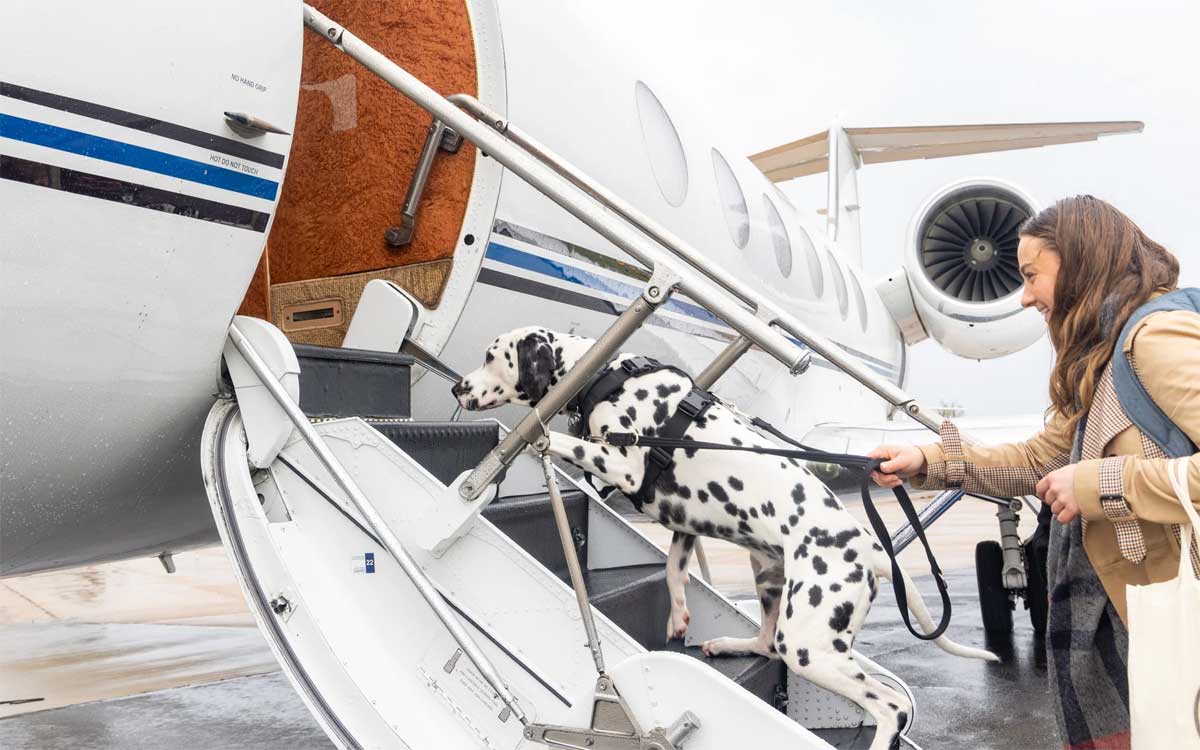
Large dog travelling by plane
Adding your pet to your booking: step by step
You add your pet while booking your flight, or afterwards via My Transavia — up to two hours before departure. Since the number of spots on board is limited, it's best to do this straight away.
Here's how:
- Log in to My Transavia
- Open your booking
- Go to special baggage & pets
- Choose cabin or baggage hold
- Indicate which pet is travelling with you
- Pay and confirm
Please note! To cancel your pet's spot, contact the Transavia Service Centre. The amount paid is not refunded.
Which documents do you need?
The basis is a pet passport, issued by a recognised veterinarian. It records, among other things:
- The rabies vaccination. It must be given at least 21 days before departure.
- The health declaration. Requirements differ per country — check with the consulate or embassy of your destination.
Your pet also needs a microchip, so it can be identified with a transponder.
A pet passport is required on domestic French routes too.
Please note! Flying to Malta with a dog means a tapeworm treatment is mandatory: between five and twenty-four hours before departure.
Coming from Turkey? Read the import conditions for animals from that country carefully.
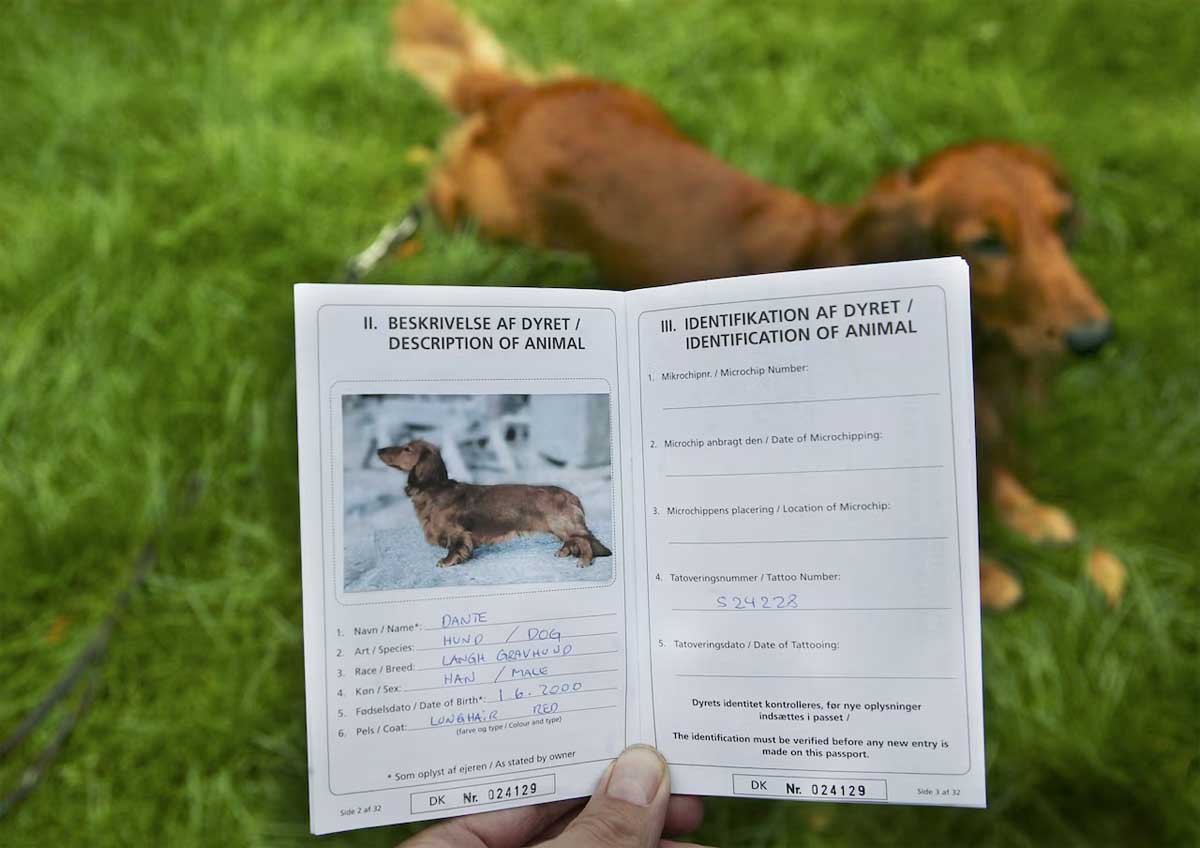
What documents are needed for pets to travel
Practical tips for the day of travel
- Use a carrier that fits your airline's limits. From the moment you step onto the aircraft, your pet stays inside and the carrier is closed.
It counts as hand luggage and goes under the seat in front of you. Opening or moving it during the flight is not allowed. - On board, always follow the crew's instructions.
- Give your pet a light meal and some water up to two hours before departure, and walk your dog just before you leave. During the flight your pet doesn't eat or drink.
- Considering a sedative? Discuss it with your vet first.
- Arrange documents and vaccinations well in advance — some deadlines run weeks ahead.
- Check that your pet's passport is still valid.
- Line the bottom of the kennel with newspaper, a towel or a blanket.
- Let your pet get used to the carrier or kennel beforehand. Five days is enough for most animals.
- If in doubt, contact the embassy of your destination: they know the local rules and any quarantine requirements.
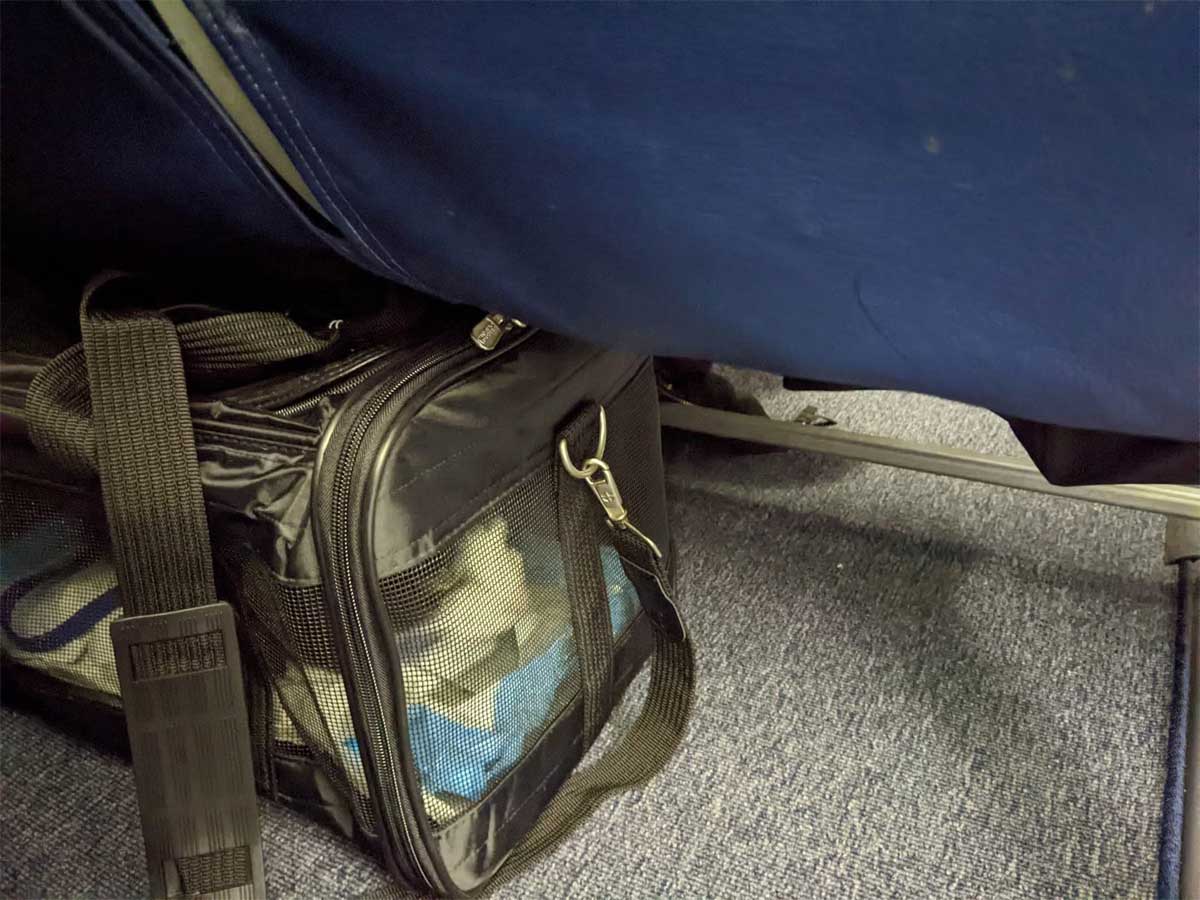
Cat travelling in the airplane cabin
Kennel requirements for the baggage hold
For travel in the hold, these limits apply:
- Dimensions: maximum 102 x 69 x 76 cm (l x w x h) per kennel.
- Weight: pet and kennel combined no more than 75 kg.
The IATA container guidelines
On top of that, the kennel has to meet the container guidelines of the IATA (International Air Transport Association). In practice that comes down to:
- Enough room to lie down, turn around and stand upright without touching the top of the kennel.
- Construction from hard plastic or fibreglass. Welded mesh kennels, wooden kennels and models with metal bars are out.
- A central locking mechanism that secures the door at the top and the bottom.
- At least four (reusable) cable ties brought to the airport, so the door can't open en route. Don't fasten them at home or before the check-in desk.
- At the check-in desk you'll be told when to fasten the cable ties — pet and kennel still have to be checked separately.
- The door pins protrude at least 1.6 cm beyond the edge of the kennel (B), top and bottom.
- Large kennels of 102 x 69 x 76 cm (size E) have their top and bottom halves bolted together (C); other closing methods aren't accepted for this size.
- Chew toys and soft toys aren't allowed inside the kennel.
- Does the kennel have wheels? Make sure they can be locked or removed before departure.

Tip: browse the Zoospot carriers here.
Travelling in the cabin: the conditions
Two basic conditions: your pet is clean and does not behave aggressively on board.
In the cabin you use a soft-sided carrier; hard plastic kennels aren't allowed here. The carrier is closed the moment you step onto the aircraft and goes under the seat in front of you.
For the safety of your pet and the other passengers, you may not open or move the carrier during the flight. If two of you are flying with two pets, they can't be seated in the same row.
Beyond that, follow the crew's instructions. Alongside your pet you may bring one piece of hand luggage.

Dimensions
Maximum 40 x 30 x 24 cm (l x w x h) per carrier.
Weight
Pet and carrier combined no more than 8 kg.
Age
Dogs and cats are at least 15 weeks old.
Price
Flight number starting with HV: € 50 per pet per one-way trip.
Flight number starting with TO: between € 60 and € 160 per pet per one-way trip.
The carrier itself has to meet these requirements:
- It's an official pet carrier, the kind you buy at a pet shop;
- It is fully closeable;
- The material is flexible. Hard plastic is not allowed;
- It has ventilation openings, so your pet gets enough air;
- Plastic windows, so your pet can look out;
- Enough room to move around.
Allergic and seated next to a dog or cat? Let the crew know; they'll look at what solutions are available at that moment.
Please note: emotional support animals and small rodents (hamsters, rabbits, guinea pigs and the like) are not carried by Transavia.
These animals are easily unsettled. An unfamiliar environment, the noise of the airport, temperature swings, handling and the flight itself put them under considerable strain.
Pet in the airplane cabin
Recent posts